Back-to-School 2025: Exclusive Survey Findings of U.S. Parents Shopping Plans
This infographic of key findings from our 2025 back-to-school survey shows how much parents plan to spend, where they ll shop, and what they plan to buy.

Zeta Global Teams Up with Fireworks to Unveil New Specialized Athena Inference Models Using NVIDIA NemotronRead News
Back-to-school shopping is one of the biggest seasonal moments in U.S. retail, but how parents prepare, plan, and purchase is constantly shifting.
Last month, we surveyed over 2,000 U.S. parents of school-aged children to learn when they plan to shop, how they’ll do it, and where their dollars are headed.
This article will dive into some of the key takeaways from that survey.
View the full infographic for all the back-to-school 2025 shopping trends.
Our survey found that September remains the top month for parents, with 35% planning to shop then. However, that’s up from 22% in 2024. Similarly, 25% of parents now plan to shop in June, up significantly from 14% last year.
August dropped significantly to 25% (from 41%), while July dropped to 15% (from 22%). So not only are the early birds having a moment, but so are the late comers.
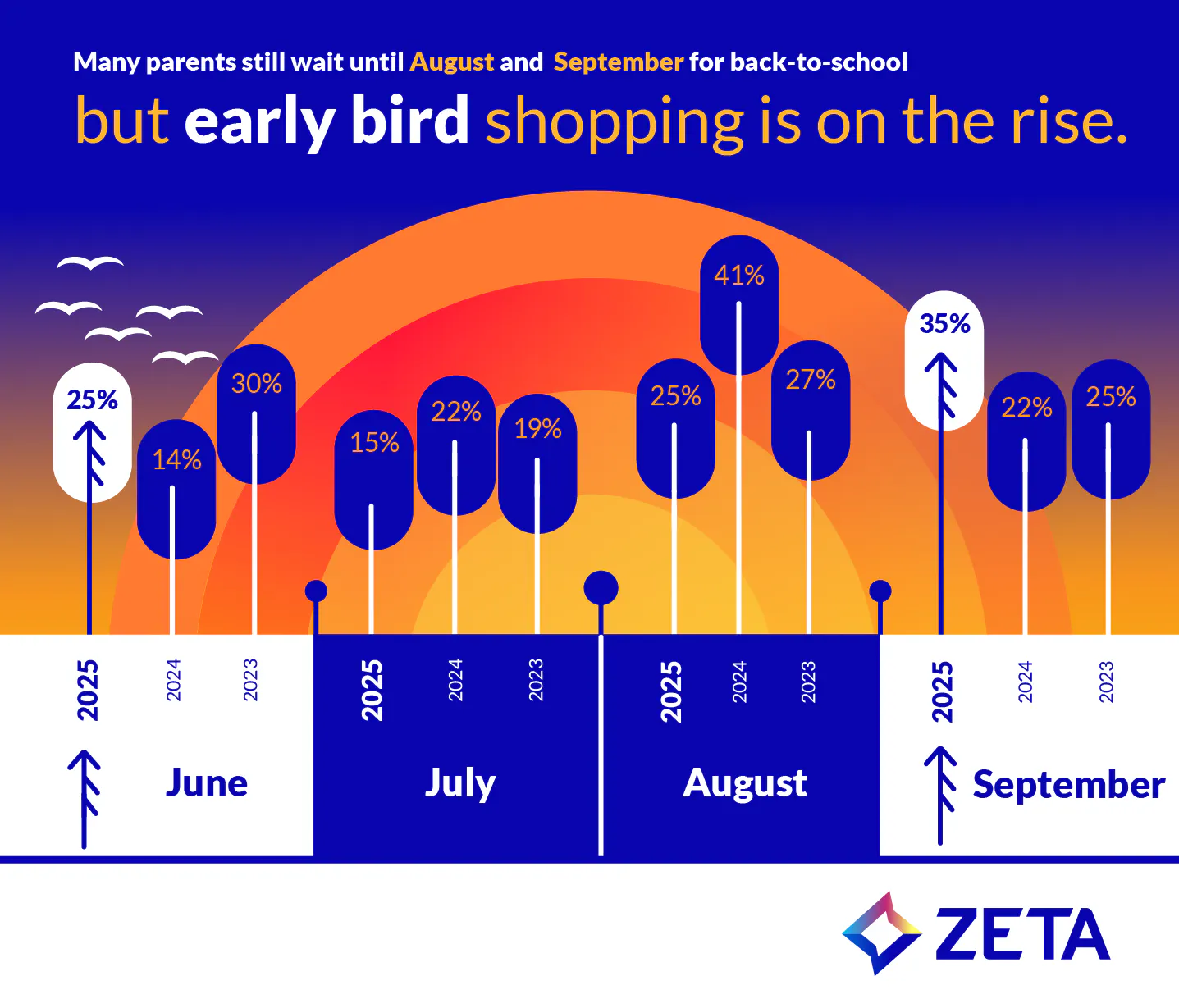
This year-over-year trend signals that back-to-school is no longer a single retail moment—it’s stretching into a multi-phase event. Parents appear to be aligning their shopping behavior with their financial calendars and personal schedules: some are locking in early deals in June, while others continue to wait for last-minute promotions in August and September.
Others may be looking for clothing and electronics now, while waiting to stock up on school supplies.
For marketers, this means promotional calendars must adapt. A single “Back-to-School Sale” isn’t enough. Instead, think of June as the awareness and early value phase, July and August as product discovery and comparison, and September as the final decision-making crunch.
Shopping intent is now staggered, and marketers who can sequence messaging across these windows will be best positioned to capture share of wallet at every stage.
In-store shopping continues to lead, with 33% of parents planning to head to physical locations. That’s down from 39% last year, but it still reflects a strong preference for tactile, in-person browsing—especially when it comes to clothing, backpacks, or supplies that kids want to see and touch before choosing. Online shopping saw a similar decline, falling to 17% (from 24%).
Meanwhile, convenience channels are seeing growth:
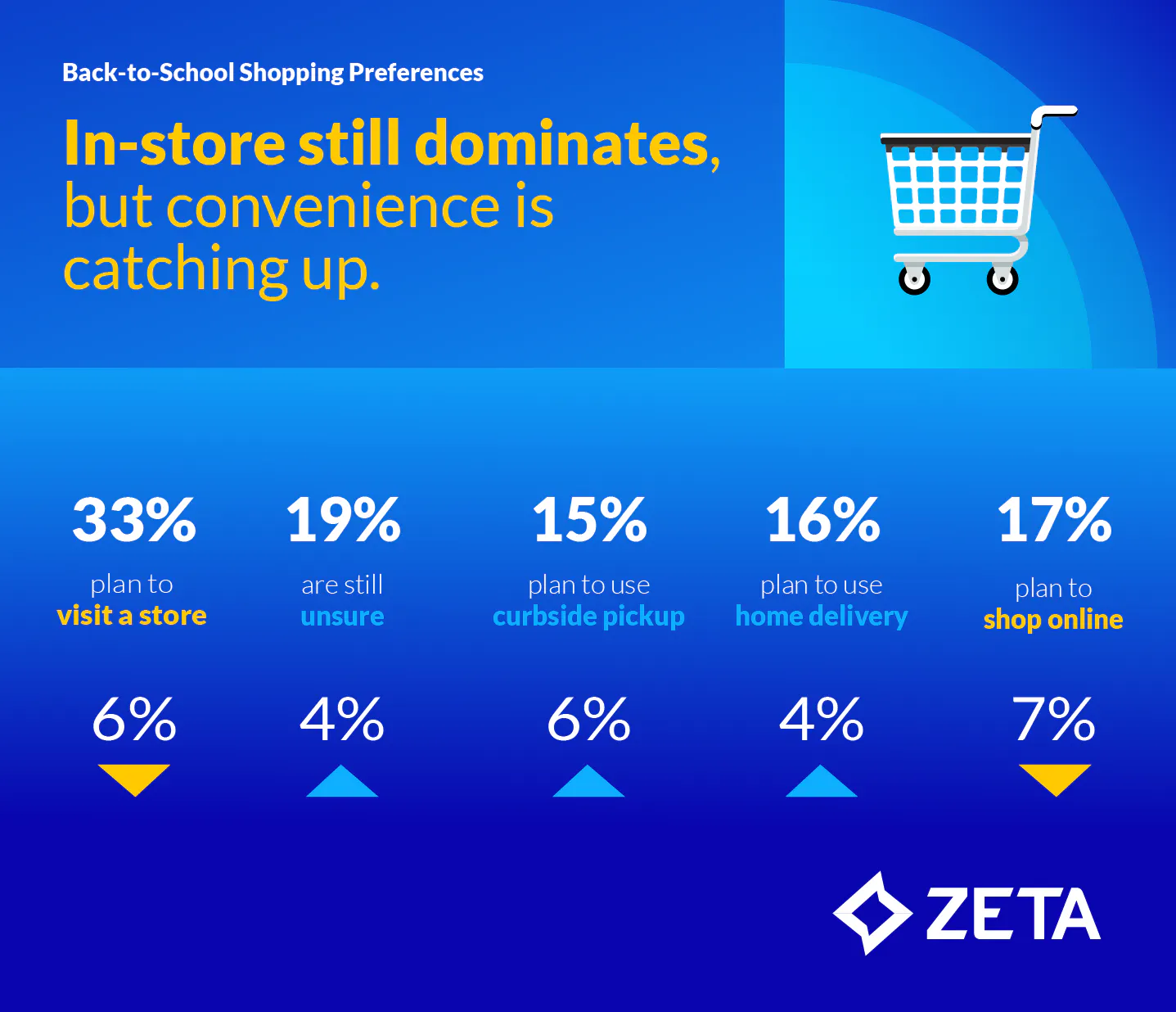
These numbers reflect a growing openness to hybrid fulfillment experiences. Parents balance control, flexibility, and time savings. The rise in undecided shoppers (19%, up from 15% last year) also points to a window of opportunity: marketers who emphasize ease, availability, and immediacy can win over parents still weighing their options.
Think of convenience not just as a feature, but as a selling point. Highlight store locator tools, same-day delivery options, and BOPIS (buy online, pick up in store) flows in your messaging. Parents are busy. If you can make their experience seamless, they’ll likely reward you with loyalty.
Big Box Stores remain the most common choice for back-to-school purchases, with 26% of parents saying they’ll shop there. This is an increase from 24% in 2024, but still down from 2023’s 29% share.
And the competition is creeping closer:
This may mean that the playing field is flattening as consumers weigh value, convenience, and selection across channels. But it also points to the fact that parents choose different stores for different purposes.
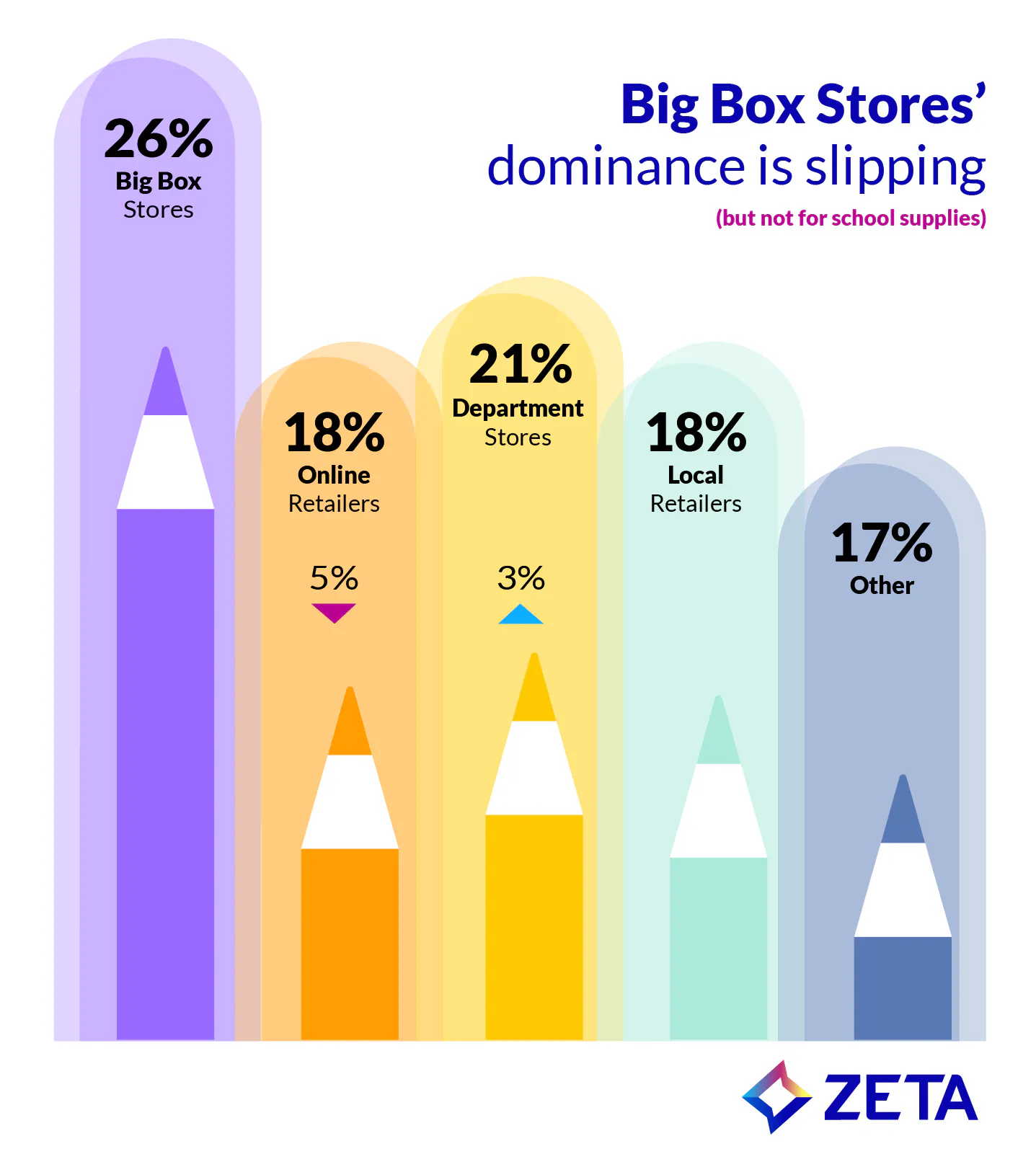
Back-to-school shopping isn’t just about school supplies—which survey respondents were planning to buy at Big Box Stores—but also include clothing, electronics, online subscriptions, and more. This spread of store types is more indicative of these different shopping categories than loyalty or share-of-wallet.
Where parents shop is also closely tied to how much they plan to spend: Among shoppers with budgets of $100–$300, 35% will head to Big Box Stores. They are also more likely to be primarily purchasing school supplies. For parents planning to spend $800 or more, Online Retailers (29%) and Local Retailers (23%) become much more common.
Back-to-school budgets are tightening in 2025—and marketers should take note. Parents are adjusting their expectations and spending levels, which means value and versatility will be key themes this season.
Compared to 2024, where a staggering 34% of shoppers planned to spend $1000+, the upper tiers of spend have dropped significantly. In contrast, the $100–$300 bracket has grown this year—making it the single largest segment of BTS shoppers.
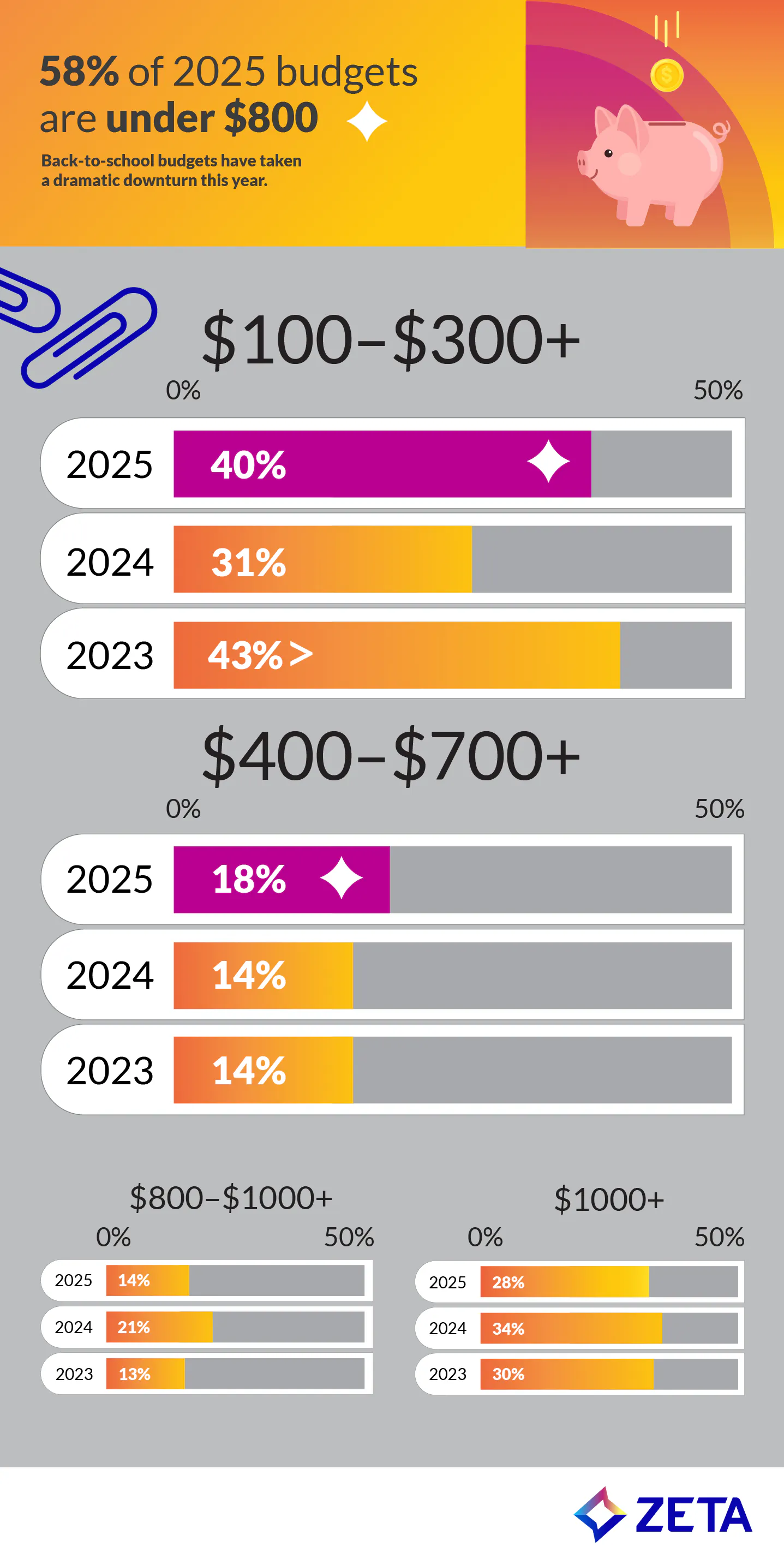
This year-over-year change may signal that high-ticket purchases are shrinking unless essential. Parents are clearly prioritizing needs over wants and stretching every dollar. For marketers, this is an invitation to lead with bundles, promotions, and tiered pricing strategies that speak to constrained budgets without compromising quality.
That said, nearly a third of respondents still plan to spend over $1000—especially on higher-ticket categories like electronics and digital resources. For this group, relevance and perceived value matter more than price alone.
In short: meet families where they are. Budget ranges don’t just shape what parents buy—they shape how and where they buy it. Campaigns that acknowledge this dynamic will feel more personalized, helpful, and ultimately, more effective.
What parents put in their carts tells us just as much as where and when they shop.
For 2025, the data shows that school supplies and essentials still anchor the season, but tech and digital tools are rising in prominence, especially among higher-spending households.
Top product categories include:
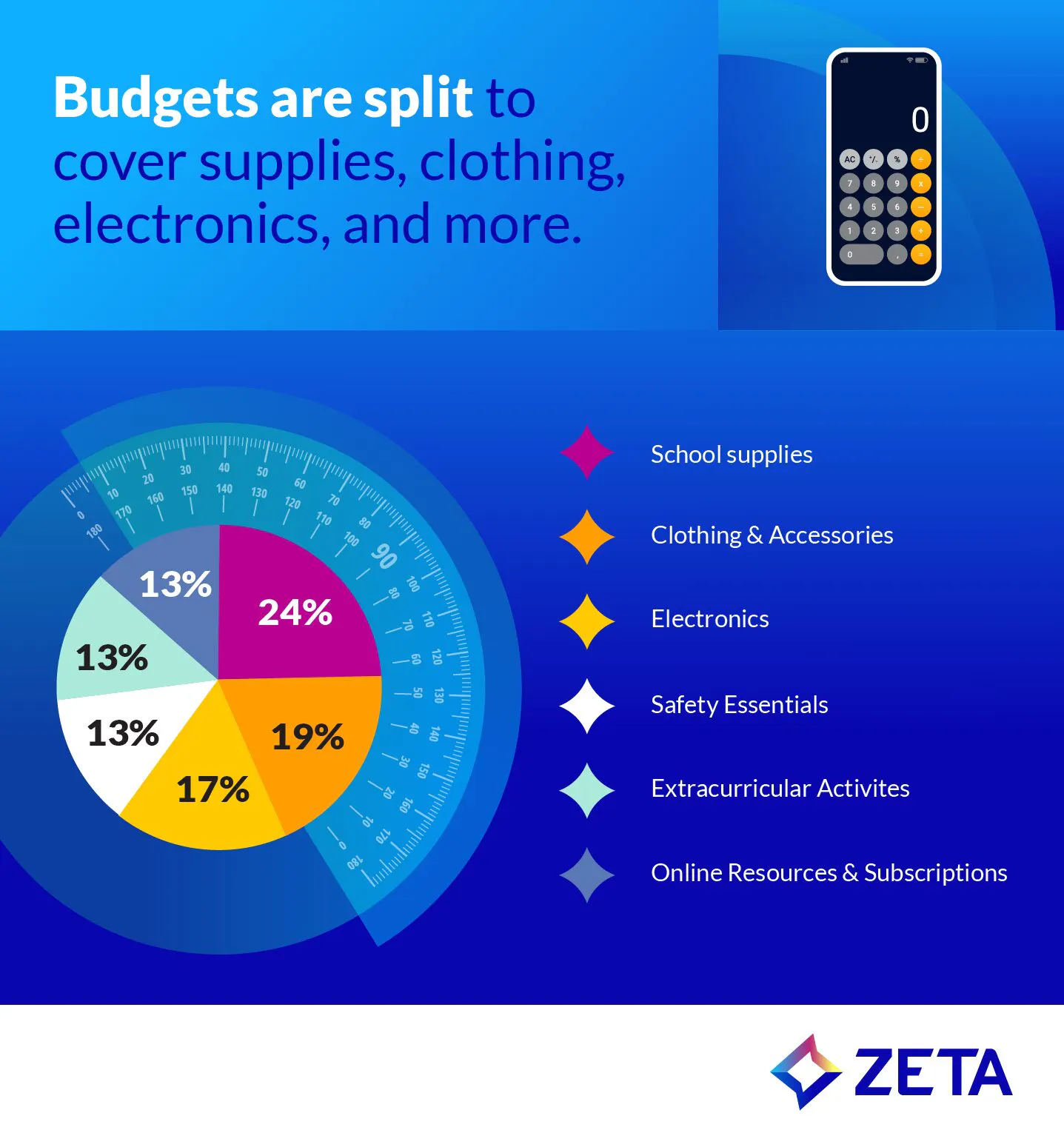
And once again, budget plays a defining role:
This segmentation suggests a nuanced product strategy: lower-budget families are looking for foundational items to check off their lists, while higher-budget families are looking to enhance and enrich their students’ experience through tech, tools, and enrichment activities.
This means retailers need to diversify promotion bundles.
Now that you understand what we learned in our survey, and how to apply it to your BTS season, let’s hit the high points one more time:
Need help planning your back-to-school programs and segments?
This infographic of key findings from our 2025 back-to-school survey shows how much parents plan to spend, where they ll shop, and what they plan to buy.

Retail expert Melissa Tatoris dives deep into Back-to-School 2025 retail trends, and provides six forward-thinking strategies to help retailers win this…

A brand loyalty shift is happening away from legacy brands. Discover what’s driving the shift and how retailers can adapt.